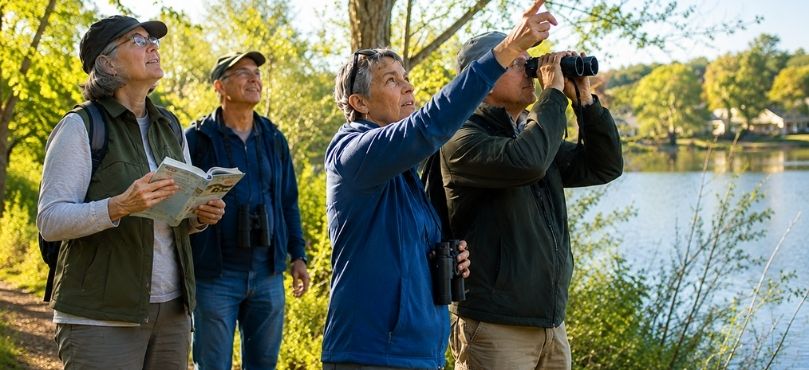
There is a reason many people feel more comfortable meeting someone while doing something together: the activity gives the interaction a purpose.
You are not standing across from one another trying to create a conversation from nothing. You are walking the same trail, learning the same skill, playing the same game, or exploring the same place. That shared focus removes some of the pressure.
You already have something in common, even if it is only for the next hour. You can comment on what is happening, ask a question about the activity, or laugh about a moment everyone just experienced. The conversation does not need to be especially clever or personal. It only needs somewhere to begin.
That is why group activities can work so well for people who want to meet others but dislike traditional networking, large social gatherings, or events where conversation is the entire point. They allow connection to happen indirectly—and that often feels more natural.
Conversation Is Easier When Something Else Is Happening
A purely social event can make every silence feel noticeable. You introduce yourself, exchange a few background details, and then begin searching for the next question.
- Where do you live?
- What do you do?
- How do you know the host?
Those questions can be useful, but they can also make the interaction feel like an interview. An activity changes the rhythm. You do not have to maintain constant eye contact or carry the conversation continuously. Your attention can shift back and forth between the person and what you are doing.
- During a walk, you can pause to notice the view.
- During a class, the instructor provides structure.
- During a game, each round creates new moments to react to.
- During a tour, the surroundings offer an endless supply of conversation starters.
This makes silence feel less uncomfortable. It also allows conversation to develop in shorter stretches. You talk for a few minutes, return your attention to the activity, and pick up the conversation again later. That pattern often feels more relaxed than trying to build rapport all at once.
Shared Experiences Create Immediate Common Ground
Meeting someone new often begins with a search for overlap.
- Do we know the same people?
- Do we have similar interests?
- Are we at comparable stages of life?
At a group activity, some common ground already exists: you both chose to be there. That choice says something. Perhaps you both enjoy being outside. Maybe you are both curious about local history, interested in learning a new game, or willing to try an activity even though you are not certain what to expect.
The shared experience gives you an easy opening:
- “Have you done this before?”
- “What made you decide to come?”
- “Do you know much about this area?”
- “Have you attended any of their other events?”
These questions feel natural because they are connected to the moment. They also reveal information that can lead the conversation further. Someone may mention that they hike regularly, recently moved to the area, or have been looking for more activities to do on weekends.
Now the conversation has somewhere to go. You are no longer speaking only because you happen to be standing beside each other.
Low Pressure Does Not Mean Low Value
It can be easy to dismiss casual interactions because they do not immediately become meaningful. You talk with someone during a walk, exchange a few comments during a class, or introduce yourself before a game. Then the event ends. Nothing dramatic happens.
But connection often begins exactly this way. Familiarity builds through small moments.
Many people hope friendship will appear fully formed. They want to meet someone and immediately feel the ease of a long-standing relationship. That is rare. Most friendships pass through quieter stages first:
- Someone you have seen before.
- Someone you occasionally talk with.
- Someone you expect to see.
- Someone you begin sitting beside.
- Someone you invite to another activity.
Low-pressure environments allow those stages to unfold without demanding too much too soon.
The Activity Protects You From Feeling Rejected
One reason people avoid social situations is the possibility that connection will not happen.
- What if no one talks to you?
- What if the conversation feels flat?
- What if everyone else seems to know one another?
Those concerns can make attending feel risky. A group activity lowers that risk because meeting people is not the only reason you are there. You still get to enjoy the walk, the lesson, the game, the tour, or the experience. Even if you do not form an immediate connection, the time can still be worthwhile.
That matters. It is easier to enter a social setting when the entire outcome does not depend on whether someone responds to you. The activity provides value on its own.
This shifts your mindset away from “I need to meet someone tonight” and toward “I am going to do something that interests me, and I may meet people along the way.”
Being Side by Side Can Feel Better Than Face to Face
Some conversations feel easier when people are moving in the same direction. Walking is a good example. You are side by side rather than directly facing one another. Your attention can shift between the conversation and the surroundings. There is less pressure to fill every pause. This can make it easier to talk about more than surface-level topics.
The same effect can happen while cycling, gardening, cooking, volunteering, or working together on a shared task.
Your body is occupied, and your mind is engaged. Conversation becomes part of the experience rather than the sole purpose of it. This is especially helpful for people who do not consider themselves outgoing.
Smaller Groups Often Create Better Opportunities
A large gathering may offer more people to meet, but it can also make connection harder. Noise increases. Groups form quickly. Conversations become difficult to enter. It is easier to feel unnoticed.
Smaller activities create a different environment. People are more likely to introduce themselves, remember who attended, and interact with more than one person. The group often develops a shared identity during the experience.
You become the people completing the route, learning the skill, solving the challenge, or exploring the site together. That temporary sense of belonging to the same group makes conversation easier. It also gives the organizer more opportunities to welcome people and help participants interact.
For someone attending alone, that can make a major difference. A smaller group does not guarantee connection, but it increases the chances that people will notice and speak with one another.
Structure Can Be More Helpful Than Spontaneity
Many people imagine that social connection should happen naturally. You meet someone unexpectedly, strike up a conversation, and immediately get along. That can happen, but relying only on chance creates very few opportunities.
Structured activities are useful because they bring people together around a defined experience. There is a start time, a meeting place, and something everyone has agreed to do.
That structure removes several barriers:
- You do not need to decide where to go or what the group will do.
- You do not need to invite people you barely know.
- You do not need to create the social setting yourself.
- You only need to show up.
Structure Can Reduce Anxiety
Structure can also reduce anxiety because you know what to expect. You know how long the activity will last and understand its general purpose. You can prepare for it and decide whether it suits your interests and comfort level.
That predictability can make it easier to take the first step.
Recurring Activities Create More Opportunities
A weekly walk, monthly game night, seasonal volunteer project, or ongoing class allows people to see one another without having to arrange every encounter individually. You do not need to reach out and ask someone to meet again right away. You know there will be another event.
That gives relationships time to develop.
You Do Not Have to Cover Everything at Once
You can say hello, learn a name, and trust that there may be another opportunity. Over time, attendance itself becomes a form of connection. People notice when you arrive. They ask where you were if you miss a week. They remember what you discussed last time.
That is how a group begins to feel familiar.
Choose Activities That Match the Kind of Connection You Want
Different activities create different types of interaction. A lecture may be interesting, but conversation is limited while the speaker is presenting. A movie can be enjoyable, but participants may leave immediately afterward. A large festival offers energy, but it may be difficult to have a sustained conversation.
Activities that work especially well for meeting people usually include opportunities to interact before, during, or after the experience. Consider:
- Walking or hiking groups
- Recreational sports
- Classes with partner or group exercises
- Volunteer projects
- Tours with smaller attendance
- Team games or challenges
- Discussion groups
- Workshops
- Social rides
- Community gardening
The Right Choice Depends on Your Interests
You are more likely to feel comfortable and meet people with similar interests when the activity genuinely appeals to you. Choose something you would be glad to experience regardless of who attends.
You Still Have to Participate
Low pressure does not mean no effort. The activity creates the opportunity, but you still have to take a small step toward the people around you.
That might mean arriving a few minutes early rather than slipping in at the last moment.
It might mean introducing yourself to one person instead of waiting for someone else to begin.
It might mean staying for a few minutes afterward rather than leaving immediately.
These actions can feel minor, but they signal openness. You do not need to become the most social person in the group. You only need to make yourself slightly easier to know.
Give the Group More Than One Chance
One event may not tell you very much. Attendance changes. The group dynamic may be different each time. The first experience may feel uncomfortable simply because everything is unfamiliar.
It is easy to attend once, decide that no connection happened, and move on. But that may be too quick a judgment. Unless the activity is clearly not a fit, consider returning a few times.
The second visit often feels different. You know where to go. You recognize the organizer. You may see someone you met previously. You understand the pace and expectations.
The energy that once went into navigating the unfamiliar can now go toward participating. That is often when conversation becomes easier.
A Question to Ask Yourself
What activity would make meeting people feel less like meeting people?
Think about something you would enjoy doing in a group. Look for an experience where conversation can grow around something shared, not a room where you must circulate and introduce yourself repeatedly.
Choose one activity that feels interesting and manageable. Register for it. Attend even if you do not know anyone. Talk with one person. Then consider going back.
The goal is not to force friendship into a single afternoon. It is to place yourself in environments where connection has a chance to develop.
Meeting people often becomes easier when meeting people is not the only reason you are there.